Announces FDA Approval of TAUKLARIFY™ (florquinitau F 18 injection) for Use in Patients Being Evaluated for Alzheimer’s Disease
来源:BIoSpace | 发布时间:2026-08-31
摘要:美国食品药品监督管理局(FDA)于2026年8月14日正式批准了由 Enigma Biomedical USA 研发的新型脑部正电子发射断层扫描(PET)显像剂 TAUKLARIFY(florquinitau F 18 注射液,曾用名 MK-6240)上市。该药物用于存在认知功能障碍、正在接受阿尔茨海默病(AD)评估的成年患者,通过静脉注射在 PET 扫描前显像,可直观、高精度地检出脑内聚集的 tau 蛋白神经纤维缠结(NFT)病理。
A novel diagnostic agent to identify patients with tau neurofibrillary tangles (NFTs), including NFTs isolated to the medial temporal lobe
KNOXVILLE, Tenn.–(BUSINESS WIRE)–Enigma Biomedical USA (EB USA) today announced the U.S. Food and Drug Administration (FDA) approval of TAUKLARIFY™ (florquinitau F 18 injection, also previously referred to as MK-6240), a radiodiagnostic agent indicated for positron emission tomography (PET) of the brain in adults with cognitive impairment who are being evaluated for Alzheimer’s disease to identify patients with tau neurofibrillary tangle (NFT) pathology.
In 2023, EB USA sold its subsidiary, Cerveau Technologies, to Lantheus to complete development of and commercialization of TAUKLARIFY. The companies have continued to collaborate to advance product development, which has culminated in this FDA Approval.
Rick Hiatt, President and CEO of EB USA stated: “The FDA granted Fast Track designation to TAUKLARIFY, a status to facilitate the development and expedite the review of drugs to treat serious conditions and fill an unmet medical need. With the approval of TAUKLARIFY, EB USA demonstrates its ongoing commitment to be the premier developer of imaging biomarkers for neurological pathologies to accelerate the development, approval, and adoption of effective therapies to treat neurodegenerative diseases.”
“TAUKLARIFY imaging will enable improved understanding of the status of Alzheimer’s disease patients across the spectrum of cognitive impairment, including those in the early stages of the disease,” said Samantha Budd Haeberlein, PhD, Chief Medical Officer of EB USA. “Two large, independent clinical studies demonstrated the efficacy and safety of TAUKLARIFY in assessing the status of NFTs in patients being evaluated for Alzheimer’s disease. As Alzheimer’s research moves towards an increased focus on early disease detection and treatment, TAUKLARIFY is uniquely suited to address those emerging needs.”
“This approval is an important and critical step forward in the management of patients being evaluated for Alzheimer’s disease,” said Sterling Johnson, PhD, Jean R. Finley Professor of Geriatrics and Dementia, Associate Director and Core Leader of the Wisconsin Alzheimer’s disease Research Center, and Associate Director of the Wisconsin Alzheimer’s institute. “The University of Wisconsin Alzheimer’s disease Research Center is proud to have been one the earliest adopters of MK-6240 in the academic research setting. We have continued to grow our use of TAUKLARIFY as our imaging agent of choice for assessment of tau neurofibrillary tangles, based on several clinically important features, particularly its high dynamic range. We find it particularly useful in elucidating the status of AD patients with mild cognitive symptoms. We are excited to witness the transition of this valuable tool from research to broad community clinical use enabled by this approval.”
TAUKLARIFY was evaluated in two clinical studies. Five independent blinded readers in each study classified scans as positive or negative for tau neurofibrillary tangle (NFT) pathology and each scan was then compared against a pre-established reference standard based on cognitive status and amyloid beta PET pathology status. The studies included scans from a total of 617 subjects, including 152 with mild Alzheimer’s disease dementia, 157 with mild cognitive impairment, and 308 cognitively unimpaired individuals. Both studies met their pre-specified success criteria:
– Study 1, (n=279), with reader Positive Percent Agreement* (PPA) (95% CI) ranging from 80% (72, 86) to 88% (82, 93), and Negative Percent Agreement (NPA) from 98% (94, 99) to 99% (95, 100).
– Study 2, (n=338), with reader PPA (95% CI) ranging from 68% (61, 75) to 82% (76, 87), and NPA from 93% (89, 96) to 99% (96, 100).
Inter-reader agreement was high in both studies, with a generalized Fleiss’ kappa of 0.92 in Study 1, and 0.86 in Study 2. Safety was evaluated in 1,734 subjects. The most commonly reported adverse reactions were headache (0.7%), nausea (0.2%), injection site reactions (0.1%), dizziness (0.1%), and abdominal discomfort (0.1%)1.
TAUKLARIFY™ Indication
TAUKLARIFY is indicated for positron emission tomography (PET) of the brain in adults with cognitive impairment who are being evaluated for Alzheimer’s disease to identify patients with tau neurofibrillary tangle (NFT) pathology.
TAUKLARIFY Limitations of Use
The safety and effectiveness of TAUKLARIFY have not been established for the evaluation of non-Alzheimer’s disease tauopathies.
IMPORTANT SAFETY INFORMATION
Warnings and Precautions
Risk of Misdiagnosis in Patients Being Evaluated for Alzheimer’s Disease
TAUKLARIFY performance for identifying patients with tau NFT pathology was assessed in subjects who were expected to have predominantly no tau NFT pathology (i.e., cognitively unimpaired and amyloid beta PET-negative) or predominantly clinically significant levels of tau NFT pathology associated with Alzheimer’s disease (i.e., cognitively impaired and amyloid beta PET-positive). TAUKLARIFY performance for identifying patients with tau NFT pathology may be lower in patients in earlier stages of the pathological spectrum.
A negative TAUKLARIFY scan does not necessarily exclude the presence of tau NFT pathology, and a positive TAUKLARIFY scan does not necessarily indicate the presence of histopathologically confirmed tau NFT pathology. Consider additional evaluation when clinical uncertainty remains.
Radiation Risk
TAUKLARIFY contributes to a patient’s overall long-term cumulative radiation exposure. Long-term cumulative radiation exposure is associated with an increased risk of cancer. Ensure safe drug handling to protect patients and health care providers from unintentional radiation exposure. Advise patients to hydrate before and after administration and to void frequently after administration.
Adverse Reactions
The most commonly reported adverse reactions, with incidence greater than or equal to 0.1%, were headache, discomfort, nausea, injection site reactions and dizziness.
Drug Interactions
CYP1A2 inducers: Avoid use of CYP1A2 inducers, including tobacco smoking, at least 7 days before TAUKLARIFY administration.
Use in Specific Populations
Lactation: Temporarily discontinue breastfeeding. A lactating woman should pump and discard breast milk for a minimum of 4 hours after TAUKLARIFY administration.
To report SUSPECTED ADVERSE REACTIONS, contact Cerveau, a Lantheus company, at 1-800-362-2668 or FDA at 1-800-FDA-1088 or www.fda.gov/medwatch.
Please see full Prescribing Information for TAUKLARIFY.
https://www.lantheus.com/tauklarify-prescribing-information
About Enigma Biomedical – USA
Enigma Biomedical USA’s vision is to be the premier provider of imaging biomarkers for neurological pathologies, associated information technology, and related tools to accelerate the development, approval, and adoption of effective therapies to treat neurodegenerative diseases. EB USA’s neuroimaging biomarkers provide pharma and academic researchers with state-of-the-art tools for enabling disease-targeted therapy development with the highest precision and accuracy. In pursuit of this vision, subsidiaries of EB USA have provided the best-in-class tau and amyloid PET imaging biomarkers, MK-6240, now TAUKLARIFY, and NAV-4694, to our academic and pharmaceutical partners to enable their research efforts. Both tracers were acquired by Lantheus for further development. EB USA also recently announced a partnerships with AbbVie and the Concussion Legacy Foundation/Boston University Chronic Traumatic Encephalopathy (CTE) Center to explore their novel 4R Tau PET Imaging Biomarkers, Alamar Biosciences and Pharmalogic. Additionally, EB USA was awarded a $2 million grant from The Michael J. Fox Foundation for Parkinson’s Research (MJFF) for the discovery and initial preclinical development of a novel α-synuclein PET Imaging biomarker.
*_PPA (Positive Percent Agreement) represents the percentage of patients with a positive TAUKLARIFY PET result among those who were tau reference standard positive. NPA (Negative Percent Agreement) represents the percentage of patients with a negative TAUKLARIFY PET result among those who were tau reference standard negative.
PET显像剂:FDA批准Tauklarify用于识别阿尔茨海默病Tau蛋白
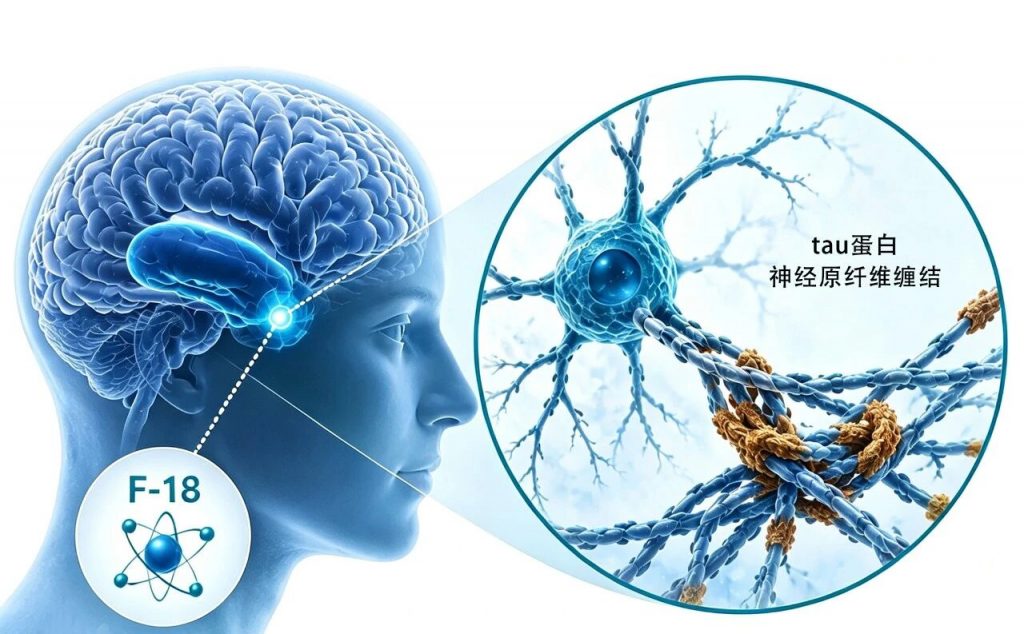
据Lantheus公司8月14日宣布,美国食品药品监督管理局(FDA)已批准其研发的经F-18标记、靶向Tau蛋白的PET显像剂Tauklarify™(florquinitau F 18注射液)上市,用于对存在认知障碍并正在接受阿尔茨海默病评估的成人进行脑部正电子发射断层扫描(PET),以识别存在tau蛋白神经原纤维缠结(NFT)病理特征的患者。
Florquinitau F 18是一种静脉注射的放射性诊断试剂,可与聚集的tau蛋白结合。在阿尔茨海默病患者的大脑中,tau蛋白聚集体结合形成神经原纤维缠结,这是阿尔茨海默病神经病理学诊断所需的两大要素之一。
Lantheus将Tauklarify定位为辅助指导诊断与治疗选择的多种手段之一(其他手段包括淀粉样蛋白PET和血液生物标志物),以应对当前正在研发中的100多种阿尔茨海默病疾病改善疗法,其中约30种针对Tau蛋白。
关键性研究数据
该批准基于两项评估了Tauklarify用于识别存在Tau神经原纤维缠结病理改变患者的有效性的盲法阅片研究(研究1和研究2)。这些研究分析了来自三项临床试验受试者的Tauklarify PET图像。这些临床试验纳入的受试者包括:患有轻度阿尔茨海默病性痴呆(符合阿尔茨海默病第4阶段)的患者(n=152)、患有轻度认知障碍(符合阿尔茨海默病第3阶段)的患者(n=157),以及认知功能正常的受试者(n=308)。
所有受试者均接受了β-淀粉样蛋白PET扫描。在tau PET扫描中,受试者接受了剂量约为185MBq(5mCi)的Tauklarify静脉注射。
在研究1和研究2中,Tauklarify扫描图像由两组各五名独立的阅片者进行判读;这些阅片者均接受过图像判读培训,且在判读过程中对受试者的临床信息及β-淀粉样蛋白PET结果不知情。针对Tau神经原纤维缠结病理,每份扫描图像均采用二分类判读法(阴性或阳性)进行分类,并与基于受试者认知状态及β-淀粉样蛋白PET结果预先设定的参考标准(RS)进行比对:
- Tau参考标准阴性:认知功能未受损且β-淀粉样蛋白PET扫描结果为阴性。
- Tau参考标准阳性:认知功能受损(表现为阿尔茨海默病引起的轻度认知障碍或轻度阿尔茨海默病痴呆)且β-淀粉样蛋白PET扫描结果为阳性。
不符合上述类别的受试者(即认知功能正常但β-淀粉样蛋白PET结果呈阳性,或认知功能受损但β-淀粉样蛋白PET结果呈阴性)未被纳入阅片研究,因为他们对参考标准不构成贡献。
在研究1中,分析了279名受试者的影像资料。受试者中包括139名β-淀粉样蛋白PET阳性者(63名为由阿尔茨海默病引起的轻度认知障碍患者,76名为轻度阿尔茨海默病痴呆患者)以及140名β-淀粉样蛋白PET阴性者(经临床评估无认知障碍)。
在研究2中,分析了338名受试者的影像资料。受试者中包括170名β-淀粉样蛋白PET阳性者(94名为由阿尔茨海默病引起的轻度认知障碍患者,76名为轻度阿尔茨海默病痴呆患者)以及168名β-淀粉样蛋白PET阴性者(经临床评估无认知障碍)。
两项研究均达到了预先设定的成功标准:
- 研究1(n=279)显示,阅片者阳性一致率(PPA)介于80%(95%CI:72%–86%)至88%(95%CI:82%–93%)之间,阴性一致率(NPA)介于98%(95%CI:94%–99%)至99%(95%CI:95%–100%)之间。
- 研究2(n=338)显示,PPA介于68%(95%CI:61%–75%)至82%(95%CI:76%–87%)之间,NPA介于93%(95%CI:89%–96%)至99%(95%CI:96%–100%)之间。
此外,还评估了各项研究中的阅片者间一致性,结果显示研究1和研究2的广义Fleiss’kappa值(95%置信区间)分别为0.92(0.89,0.96)和0.86(0.82,0.89),表明具有较高的阅片者间一致性。
Tauklarify的安全性在两项临床试验中针对总计1,734名受试者进行了评估。报告的最常见不良反应包括头痛、恶心、注射部位反应、头晕和腹部不适。处方信息中还包含了关于误诊风险及辐射风险的警告与注意事项。